

What if the most sophisticated scent in your collection isn't a floral bouquet or a citrus spark, but the aromatic scar tissue of a dying tree? In the heart of the United Arab Emirates, this dark resin known as oud represents more than just a fragrance; it's a cultural heartbeat that has pulsed through the region for over 3,000 years. You've likely felt the weight of its complex sillage in a crowded majlis and wondered if such an intense, animalic profile could ever truly feel like you. A scent for the bold. It's a common hesitation, especially when a single tola of authentic oil can reach prices exceeding 15,000 AED, while synthetic alternatives sit on shelves for as little as 50 AED.
We're here to bridge that gap between ancient tradition and your personal style. You'll discover the biological mystery of the Aquilaria tree and the sensory artistry required to transform its defense mechanism into a bespoke masterpiece. We'll show you how to identify diverse scent profiles, whether they're smoky, sweet, or wood-forward, so you can wear this liquid gold with effortless confidence. From understanding the vast price disparity to finding your perfect accord, this is your journey into the soul of scent.
Key Takeaways
- Uncover the biological miracle of the Aquilaria tree and how its rare resinous defense creates the world’s most coveted "liquid gold."
- Navigate the rich olfactory spectrum by learning the distinct differences between the animalic intensity of Indian profiles and the jammy sweetness of Cambodian varieties.
- Master the sophisticated art of layering to balance the deep, resonant bass of Oud with ethereal notes like rose or citrus for a bespoke signature.
- Discover why high-concentration Extrait de Parfum is the essential medium for those seeking a fragrance that tells a truly immersive and enduring sensory story.
What is Oud? Defining the Liquid Gold of Perfumery
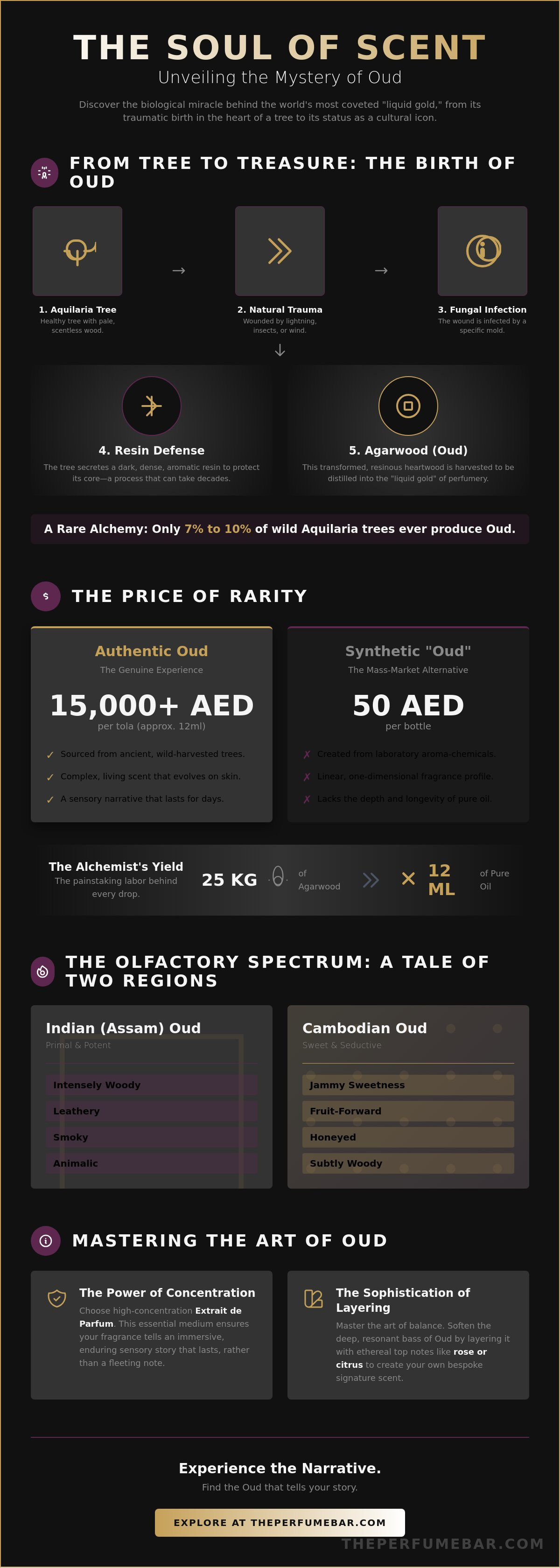
To understand the essence of the Middle East, one must first breathe in the heavy, honeyed smoke of o ud. It isn't just a fragrance; it's a biological miracle. This precious substance begins its life deep within the heart of the Aquilaria tree, native to the dense forests of Southeast Asia. When these trees encounter a specific fungal infection, they produce a dark, aromatic resin as a defense mechanism. This resin transforms the pale, scentless wood into what we call agarwood. It's a rare alchemy of nature where trauma becomes beauty. To learn more about the technical origins, you can explore What is Agarwood (Oud)? for a deeper look at its formation.
While the name shares its spelling with the pear-shaped lute heard in traditional Arabic music, the scent is its own distinct symphony. One resonates in the ear; the other vibrates in the soul. Often referred to as liquid gold, its value reflects both its scarcity and the painstaking labor required to extract its essence. It's a scent that defines a region, yet its appeal is universal and timeless.
The Cultural Weight of a Scent
In the United Arab Emirates, fragrance is a silent language of hospitality and respect. It's the first greeting in a Majlis and the final, lingering memory of a departing guest. Historically, the finest resins were reserved for royal courts and sacred ceremonies, acting as a bridge between the physical and the spiritual. Today, the scent of o ud serves as a sophisticated signature in professional gatherings across Dubai and Abu Dhabi. It's a mark of status that transcends fashion. What was once a regional treasure has evolved into a global luxury staple, found in the most exclusive boutiques from London to Paris. This transition hasn't diluted its meaning; it has only amplified its prestige as the ultimate form of self-expression.
Why Real Oud Commands a Premium
The staggering cost of authentic oud is a direct reflection of time and rarity. It can take decades, sometimes over a century, for an Aquilaria tree to develop the resinous heartwood required for high-quality oil. The extraction process is so intensive that 25 kilograms of infected heartwood typically yields a mere 12 milliliters of pure essential oil. This lopsided ratio explains why premium oils in the local market often retail for upwards of 2,500 AED per tola.
- Wild-Harvested 'Vintage' Oud: These oils come from ancient, naturally infected trees and possess a complexity that's impossible to manufacture.
- Sustainable Plantations: Modern methods involve inoculating trees to stimulate resin growth, ensuring the industry's future while protecting endangered wild forests.
- Aged Profiles: Much like a fine vintage, the oil's character deepens and matures over years of careful storage.
The difference between a mass-market synthetic and a pure, artisanal distillation is profound. Genuine oud is alive. It reacts with the wearer's skin, unfolding in layers that can last for days. It's an investment in a sensory narrative that no laboratory can fully replicate.
The Biological Masterpiece: How Nature Creates Oud
The birth of oud isn't a gentle process. It's a violent, beautiful defense mechanism. When the Aquilaria tree is wounded by lightning, insects, or wind, it becomes vulnerable to the Phialophora parasitica mold. In response, the tree secretes a dark, aromatic resin to protect its core. This isn't just a biological reaction; it's the tree's soul manifesting in physical form. In the wild, this occurrence is rare. Research suggests that only 7% to 10% of wild trees ever produce this resin. This scarcity makes the substance one of the most expensive raw materials in the world, often fetching prices that exceed AED 100,000 per kilogram for the highest quality wood in the UAE market.
Resilience as an Art Form
We see the tree's struggle as a metaphor for the human experience. Beauty often emerges from the most challenging circumstances. The specific scent profile depends heavily on the "terroir" of the forest. An Aquilaria tree in the humid jungles of Cambodia produces a sweet, fruit-forward resin. In contrast, the ancient forests of Assam, India, yield a profile that is primal, leathery, and intensely woody. Each region imprints a unique chemical DNA onto the resin. This creates a library of scents that tell the story of the earth itself. Every drop of oud carries the history of the tree's survival.
Distillation: The Alchemist’s Touch
Transforming heavy heartwood into a liquid gold requires immense patience. Artisans typically use one of two methods to capture the essence of the wood:
- Hydro-distillation: The wood chips soak in water before being boiled in traditional copper stills. This often yields a deeper, more "barnyard" profile favored in traditional Arabian perfumery.
- Steam distillation: High-pressure steam passes through the wood, extracting the oil more gently. This results in a cleaner, woodier scent that highlights the ethereal top notes.
The process doesn't end at the still. Freshly distilled oil is often sharp and volatile. It requires "curing," a period of aging that can last from six months to several years. This time allows the harsh edges to soften, leaving behind a smooth, sophisticated sillage. As you explore our curated collection of niche fragrances, you'll notice how this aging process translates into a scent that lingers on the skin for hours. To ensure the purity of an Extrait de Parfum, the artisan must monitor every degree of temperature. It's a delicate dance between fire, water, and time.
The Olfactory Spectrum: Mapping the Accords of Oud
The character of the resin changes based on the soil that nurtured the Aquilaria tree. It is a liquid map of Southeast Asia; each region offers a distinct signature that speaks to the climate and the specific fungal infection that birthed the scent. Finding the perfect o ud requires an appreciation for these geographic nuances. It's not a single scent but a vast library of sensory experiences.
- Indian Oud: This is the traditionalist’s choice. Harvested largely in the Assam region, it's famous for a primal, animalic intensity. It often begins with a "barnyard" quality that settles into a deep, leathery warmth. It's a scent for the bold.
- Cambodian Oud: Often found in the Koh Kong province, this variety is the gourmand of the family. It's celebrated for its "jammy" profile, reminiscent of dark red fruits, honeyed tobacco, and balsamic sweetness. It feels thick and luxurious on the skin.
- Thai and Vietnamese Oud: These are the ethereal cousins. They offer a lighter, woodier experience with surprising hints of green tea or white florals. They lack the heavy fermentation of Indian varieties, making them ideal for the humid afternoons of Dubai or Abu Dhabi.
Natural resin is a complex chemical miracle containing over 150 distinct aromatic compounds. Synthetic alternatives, while more affordable, usually rely on three or four molecules to mimic the scent. They lack the "shimmer" of the real thing. A genuine oil will evolve over twelve hours; a synthetic one stays static and flat. You can feel the difference in the back of your throat. It's the difference between a photograph and a living, breathing landscape.
Understanding the Layers of an Oud Accord
The first spray often surprises the uninitiated. The top notes can be sharp, medicinal, or even slightly sour. Don't let this initial burst deter you. Within twenty minutes, the heart notes emerge. This is where the story unfolds, revealing smoky narratives and spicy depths that bond with your unique skin chemistry. The base notes provide the legendary longevity. On a silk scarf or a cotton kandora, the scent can linger for three to four days, leaving a ghostly, woody trail that refuses to fade.
Choosing Your First Oud
If you're new to this world, don't start with a pure, aged Indian oil. It can be overwhelming. Look for "Oud-light" compositions where the resin is balanced by Bulgarian rose, saffron, or creamy sandalwood. These blends act as a bridge, introducing the complexity of the wood without the heavy animalic weight. Always test on your pulse points rather than a paper strip. The heat of your blood is the catalyst that wakes the resin up.
Sillage is your final consideration. In the UAE, fragrance is a social announcement. A scent with heavy sillage will fill a room before you even speak. For professional settings in the DIFC, you might prefer a "skin scent" profile that stays close to the body. For an evening Majlis, a more expansive projection is expected. It's about finding the volume that matches your presence. Memories captured in a bottle deserve the right stage.
Mastering the Art: Wearing and Layering Oud
Layering isn't just a technique; it's a profound form of self-expression. It allows you to move beyond the bottle and curate a bespoke scent that exists only on your skin. Think of Oud as the dark, resonant bass note in a complex symphony. It provides the foundation, the depth, and the lingering soul of the fragrance. To master this art, you must balance this heavy weight with "treble" notes that offer lift and light. Sparkling bergamot, crisp pear, or airy jasmine act as a necessary counterpoint, preventing the resinous wood from feeling stagnant or overwhelming.
Application requires a delicate touch to ensure longevity without compromising the comfort of those around you. Instead of a cloud of mist, focus on pulse points where the blood flows closest to the skin. The wrists, the base of the throat, and behind the ears are traditional, but a small dab behind the knees can create an ethereal trail as you move. Don't rub your wrists together; this friction breaks down the delicate molecules and shears the top notes before they've had a chance to breathe.
The Perfect Pairings
The union of Rose and Oud remains the most celebrated accord in Middle Eastern perfumery. It's a study in contrasts where the fragile, dewy petals of the rose soften the ancient, smoky intensity of the wood. For a more contemporary narrative, try pairing your o ud with creamy vanilla to create a sophisticated gourmand finish, or lean into the ruggedness by layering it with deep leather notes. If you're curious about how these traditional pairings differ from global trends, our guide on Arabic Perfume vs. Western Fragrance offers a deeper look into these stylistic evolutions.
Occasion-Based Scenting
Context is everything when selecting your strength. In the professional environments of Dubai or Abu Dhabi, a subtle Oud oil or a light Eau de Parfum offers a sophisticated whisper of presence. Save the bold, intoxicating Extraits for evening galas or outdoor events where the air is cooler. Etiquette is vital in shared social spaces; often, two strategic sprays are more impactful than five. As your body temperature rises throughout the day, it acts as a silent conductor, causing the o ud to bloom and unfurl its most intimate layers against your skin.
The UAE climate is a powerful catalyst for fragrance. High humidity and temperatures frequently exceeding 40 degrees Celsius don't just carry a scent; they amplify its projection significantly. In this intense heat, the resinous molecules expand rapidly, making the fragrance feel more "alive." Choosing a high-quality, authentic base ensures that this amplification remains elegant rather than cloying.
Experiencing the Narrative with The Perfume Bar
At The Perfume Bar, we don't just sell scents; we curate experiences that linger long after you leave the room. Our commitment to high-concentration Extrait de Parfum ensures that every drop of o ud we offer carries a profound sillage. These formulations often contain between 20% and 40% perfume oil. This is a standard that honors the intensity expected in the sophisticated UAE market, where fragrance is a daily ritual rather than an afterthought. We blend the deep, ancient heritage of the Middle East with a modern elegance that speaks to the global connoisseur. Our approach is deliberate. By merging the smoky, resinous traditions of the past with the sleek, minimalist aesthetics of the present, we create a bridge between generations of fragrance lovers.
We invite those who share this passion for olfactory excellence to explore our franchise opportunities. It's a chance to bring the artistry of niche perfumery to new cities across the region, sharing the transformative power of scent with a wider audience. We provide the structural expertise; you provide the passion for storytelling through fragrance. This partnership allows the brand’s unique philosophy to reach every corner of the Emirates, from the bustling streets of Dubai to the cultural heart of Abu Dhabi.
Bespoke Olfactory Storytelling
Finding a signature scent is a deeply personal voyage that requires patience and intuition. We guide our clients through a sensory exploration to discover the o ud profile that resonates with their specific soul. Whether it's the animalic, leathery depths of a traditional blend or a floral-infused modern interpretation, our sourcing remains uncompromising. We secure the finest raw materials to ensure every bottle reflects our national reputation for excellence. These are memories captured in a bottle, waiting for you to claim them as your own. Our curators act as guides, helping you peel back the layers of your own preferences to find a scent that feels like a second skin.
Elevate Your Next Event
Imagine your next wedding or corporate gathering transformed by an interactive scent station. A perfume bar adds a layer of sensory luxury that guests won't forget. They can engage directly with the complex notes of a fragrance, learning how different accords interact on their own skin. This social, artistic setting turns a simple event into a lasting memory. In a city where luxury is the standard, providing a bespoke fragrance experience sets your occasion apart. Explore our luxury fragrances and event services to start your journey into the world of bespoke scent today. Whether you are hosting an intimate gathering or a grand celebration, we bring the narrative of scent to life for every guest.
Step Into Your Own Olfactory Legacy
Understanding the rare transformation of agarwood into liquid gold is only the beginning of a lifelong sensory journey. You've discovered the biological mystery behind the scent and the delicate art of layering accords to express your unique identity. Now, it's time to move beyond the page and inhabit the narrative yourself. Fragrance isn't just a choice; it's a profound form of self-expression that lingers in the air like a whispered memory.
Since 2014, The Perfume Bar has been deeply rooted in the rich fragrance heritage of the UAE, offering award-winning scent curation that transcends the ordinary. We specialize in high-concentration Extrait de Parfum to provide unmatched longevity for every o ud enthusiast. From professional event activations to our curated boutique collections, we invite you to find a scent that speaks your truth. Discover the intoxicating world of luxury Oud at The Perfume Bar and let your signature story begin today.
Frequently Asked Questions
Why is Oud so expensive compared to other perfume notes?
Oud is expensive because it's produced only when the Aquilaria tree is infected by a specific mold, a rare process occurring in fewer than 2% of wild trees. In the UAE market, high-quality Agarwood oil can reach prices exceeding 100,000 AED per kilogram according to industry reports. This scarcity creates its legendary status. It's a slow, natural alchemy. Pure liquid gold. A single drop carries years of history and patient transformation.
Is Oud fragrance suitable for both men and women?
Oud is a genderless masterpiece that adapts beautifully to any wearer, transcending traditional binary fragrance categories. In Middle Eastern perfumery traditions, both men and women have layered this rich resin for centuries to create a personal aura. It's about the narrative you wish to project. A bold signature for everyone. The scent finds its own balance on the skin, shifting its character to match your unique spirit.
How can I tell if a perfume uses real Oud or a synthetic substitute?
You can distinguish real oud by its evolving complexity; natural oil reveals animalic, woody, and sweet facets over several hours, while synthetics often remain flat. Genuine Agarwood oil contains over 150 separate chemical compounds identified by laboratory analysis. Synthetics usually mimic only the smoky top notes. Real oud breathes. It tells a story that changes from the first spray to the final, lingering dry down on your pulse points.
What does Oud actually smell like to a beginner?
To a newcomer, this scent often presents a profound profile of damp earth, aged wood, and a warm, balsamic sweetness. It's an acquired luxury, much like a fine vintage or a complex espresso. Some perceive a slight medicinal edge or a mysterious, smoky trail. It's an olfactory journey that feels both ancient and modern. Intimidating at first, it soon becomes an utterly addictive sensory experience you won't forget.
How long does an Oud-based Extrait de Parfum typically last on the skin?
An oud-based Extrait de Parfum typically lasts between 10 to 14 hours on the skin due to its exceptional oil concentration. These formulations often contain 25% to 40% aromatic compounds, ensuring a powerful sillage that commands attention. It lingers through the day and deep into the evening. A steadfast companion. Your scent trail remains long after you've left the room, anchored by the heavy, resinous molecules of the wood.
Can I wear Oud in hot weather, or is it strictly a winter scent?
You can wear oud in the UAE's heat by choosing lighter, "white" accords or those blended with refreshing citrus and floral notes. While heavy resins thrive in the 15 degree Celsius chill of a desert winter night, modern compositions work beautifully in 40 degree Celsius summer heat. It's about the dose. A light touch is transformative. It remains elegant even under the intense sun of the Emirates.
What is the best way to layer Oud with my existing perfumes?
The most effective way to layer is by applying a pure oil base first, followed by a lighter floral or citrus spray to create a bespoke aura. This technique, common in Dubai's fragrance boutiques, allows the heavier molecules to anchor the fleeting top notes. It creates a three-dimensional effect. Your own personal masterpiece. Experiment with Taif rose or sparkling bergamot to find a combination that speaks your name.
Does Oud smell different on every person?
Oud reacts uniquely with your skin's pH levels and natural oils, ensuring the scent is never exactly the same on two different people. Factors like your diet, skin hydration, and even the 37 degree Celsius body temperature influence how the molecules evaporate. It's a living collaboration between the perfume and the wearer. Your skin is the final ingredient. This makes the fragrance a truly intimate and private expression of self.