

Why does a single drop of oil from an Emirati atelier often linger longer than a full bottle of Parisian eau de toilette? It's a question many fragrance enthusiasts in the UAE ask when their favorite Western scents seem to vanish the moment they step into the 40-degree heat. Perhaps you've felt that traditional arabic perfume is a bit too heavy for a casual afternoon, or maybe you're simply lost in the complex terminology of attars and mukhallats. It's perfectly natural to feel overwhelmed by such a dense, intoxicating history that feels so different from the airy compositions of Europe.
You're about to unlock a world where fragrance is more than a finishing touch; it's a narrative of identity and memory. We'll show you how to master the unique notes of the region and choose high-concentration oils that truly defy the humidity. From the deep, woody resonance of oud to the ethereal lift of a French floral, this guide explores how to bridge these two olfactory worlds through the sophisticated art of layering. You'll learn to curate a bespoke sillage that feels both intimate and high-end, ensuring your signature scent remains as timeless as the desert itself.
Key Takeaways
- Delve into the cultural soul of fragrance, where scent serves as a poetic expression of hospitality and deep-rooted personal identity.
- Decode the iconic "Holy Trinity" of regional notes and the sensory journey offered by the legendary Taif and Damask roses.
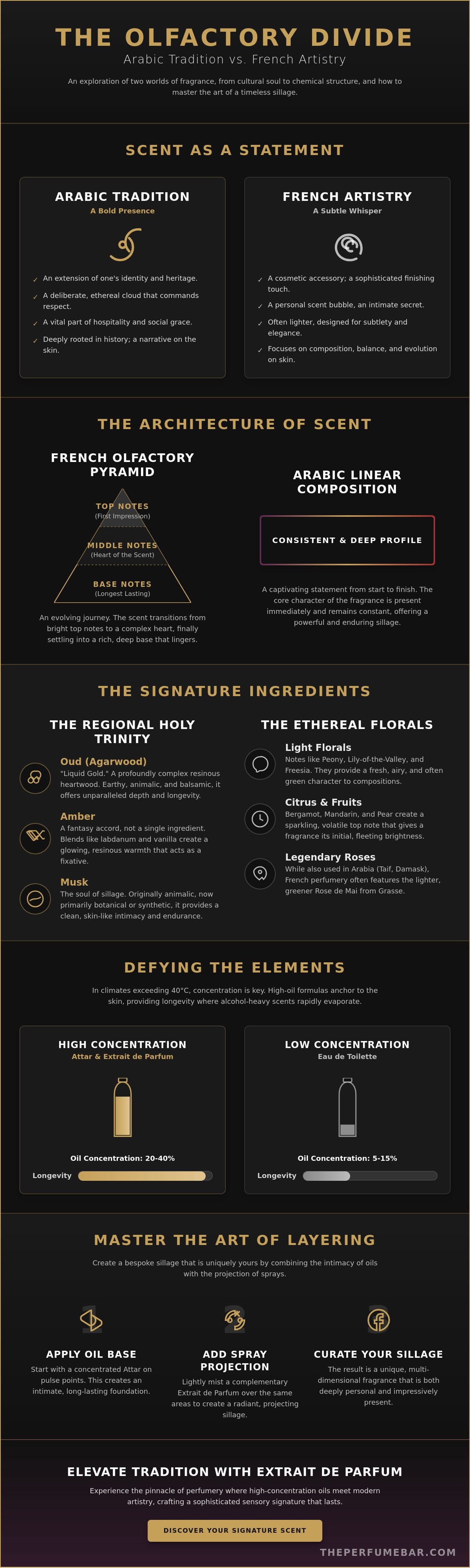
- Learn the architectural differences between the French olfactory pyramid and the captivating, linear composition of arabic perfume.
- Master the art of layering oils and sprays to curate a bespoke sillage that leaves a timeless, ethereal impression.
- Explore how high-concentration Extrait de Parfum elevates traditional craftsmanship into a sophisticated, modern sensory experience.
Understanding the Soul of Arabic Perfume: More Than Just a Scent
To wear an arabic perfume is to carry an entire heritage upon your skin. It is a language spoken without words, a silent introduction that signals your arrival and lingers long after you have departed. In the United Arab Emirates, fragrance is far more than a cosmetic accessory; it is a vital expression of personal identity and a cornerstone of social grace. This deeply rooted connection to scent defines the regional concept of sillage. While Western contexts often view a fragrance trail as a subtle whisper, in the Middle East, sillage is a deliberate extension of one's presence. It is a bold, ethereal cloud that commands space and commands respect.
The history of perfumery in this region is a testament to scientific and artistic mastery. As early as the 9th century, Al-Kindi authored the Book of the Chemistry of Perfume and Distillations, cataloging over 100 recipes for fragrant oils and waters. This ancient expertise turned scent into a social fabric. It is a gesture of profound respect. An intimate gift. A mark of status. This legacy ensures that every bottle is not just a product, but a narrative of a civilization that has mastered the art of the ephemeral.
The Heritage of Olfactory Storytelling
Hospitality in an Emirati home is incomplete without the ritual of fragrance. Guests are frequently welcomed with the intoxicating smoke of burning agarwood or the application of precious oils, a practice that bridges the gap between stranger and friend. These scents create a sensory map of memories, anchoring specific moments and people in the mind through the power of smell. Arabic perfumery is the invisible architecture of regional culture. It constructs rooms out of air and history out of complex accords. It is a bespoke experience that transforms a simple greeting into a lasting emotional connection.
From Attars to Extraits
The regional industry has undergone a sophisticated evolution, moving from the traditional reliance on Attars to the mastery of modern sprays. Attars are highly concentrated, alcohol-free oils that offer an intimate, skin-close experience. However, the demand for greater projection and global luxury standards has led to the rise of high-concentration sprays, particularly Extraits de Parfum. This shift is practical as much as it is aesthetic. In a climate where summer temperatures frequently exceed 45 degrees Celsius, the volatility of a scent is a constant challenge. High-concentration formulations ensure that the fragrance remains steadfast against the heat. They provide the longevity required for a lifestyle that transitions from sun-drenched outdoor environments to the refined, cooled atmosphere of a private majlis. Memories captured in a bottle. A scent for the bold.
The Olfactory Signature: Decoding the Iconic Notes of the Gulf
To understand the allure of arabic perfume, one must look beyond the bottle. It's a narrative woven into the air of every Majlis, a heritage of scent that defines the very fabric of social life in the UAE. These fragrances are built on a foundation of historical reverence. As highlighted in the Perfumes of the East exhibition, these raw materials have served as markers of status and spiritual connection for centuries. Every spray tells a story of the desert, the sea, and the spice routes of old.
Oud: The Liquid Gold of the Desert
Oud is the undisputed soul of regional perfumery. It's the resinous heart of the Aquilaria tree, produced only when the wood becomes infected with a specific mold. This rare defense mechanism creates a scent profile that is profoundly complex. It ranges from earthy and animalic to a sweet, balsamic warmth that lingers for days. You'll find it's both grounding and intoxicating. To identify high-quality Oud in a blend, look for a "barnyard" depth that eventually smoothens into a creamy, woody finish. If the scent remains sharp or synthetic after thirty minutes, it lacks the purity of genuine agarwood. A scent for the bold.
The Warmth of Amber and Musk
Amber and Musk act as the silent conductors of this olfactory orchestra. While Musk offers a "clean," skin-like intimacy, Amber provides a glowing, resinous heat. Historically, Musk was sourced from the Himalayan musk deer, but modern ethical perfumery in the UAE utilizes botanical or synthetic alternatives to capture that same velvety sillage. Amber is a fantasy accord, typically a blend of labdanum, vanilla, and benzoin. These base notes don't just smell; they anchor. They provide the legendary 24-hour longevity that defines arabic perfume. They are memories captured in a bottle.
The "heat" of a Gulf fragrance often comes from a masterfully balanced spice rack. Saffron adds a leathery, bittersweet edge, while Cardamom introduces a cool, green vibration that cuts through heavier resins. Rose serves as the floral heart, but it's far from the delicate garden varieties of Europe. Taif roses, grown at altitudes above 1,800 meters in the mountains, are crisp and spicy. Damask roses are honeyed and deep. They bring a regal, intoxicating quality to the composition.
There's a common misconception that all regional scents are heavy or suffocating. This isn't the case. Modern Khaleeji perfumery frequently incorporates "airy" accords to suit the humid climate of Dubai and Abu Dhabi. Think of white florals, aquatic notes, or bright citrus layered over a translucent musk base. These blends feel like a cool breeze through a silk curtain. They are ethereal and light, yet they retain that signature Middle Eastern persistence. If you're ready to find your own narrative, explore our curated collection of niche blends and discover a scent that speaks your language.
The Great Comparison: Arabic Tradition vs. French Artistry
French perfumery is often built like a pyramid. It begins with a bright, citrusy flash that evaporates within minutes. This is the top note. Then comes the heart, usually floral, before the scent settles into a woody or musky base. It is a journey of transformation. Arabic perfume follows a different rhythm. It is often described as linear or circular. The core accord, rich with oud, amber, or musk, remains present from the first spray until the final trace on the skin. It is a scent for the bold.
Western fragrances often prioritize elegance through subtlety. They are designed for the office, the casual brunch, or the intimate dinner. They whisper. Arabic scents, however, are designed to announce. In the high-heat environments of the UAE, where summer temperatures frequently exceed 45 degrees Celsius, a fragrance must possess a certain architectural strength to survive. This creates a cultural preference for presence over transparency. Today, the lines are blurring. Modern niche houses in Paris and Milan are increasingly adopting the heavy resins and oils of the East, while regional designers are experimenting with the airy aldehydes of the West.
Structure and Evolution on the Skin
Western scents rely on the volatility of ingredients. Citrus and light herbs dance on the surface before disappearing. This creates a refreshing but fleeting opening. In contrast, arabic perfume often leads with its heaviest hitters. Spices like saffron or deep resins are immediately perceptible. Instead of a shifting narrative, the scent offers a deep, consistent hum. It is a persistent embrace that stays true to its identity for hours.
Concentration and Longevity
Concentration is the technical heart of this comparison. Most Western department store finds are Eau de Toilette or Eau de Parfum. These are beautiful but light. Arabic traditions lean toward the Extrait de Parfum or pure attars. These formulations contain a significantly higher percentage of perfume oil, often reaching 30% or 40%. This isn't just about luxury; it's a functional necessity for the regional climate. Higher oil content ensures the fragrance clings to the skin rather than vanishing into the desert air.
| Feature | Western (EDT/EDP) | Arabic (Extrait/Oil) |
|---|---|---|
| Oil Concentration | 8% to 15% | 20% to 40% |
| Longevity | 4 to 7 hours | 12 to 24+ hours |
| Sillage | Moderate, intimate | Heavy, enveloping |
| Typical Opening | Citrus, Bergamot, Pear | Oud, Saffron, Spices |
The Art of the Sillage: How to Wear and Layer Intense Fragrances
In the heart of the UAE, fragrance is never a mere afterthought. It's a signature, a silent introduction that lingers in a room long after you've departed. This enduring trail, known as sillage, is elevated through the ancient Khaleeji tradition of layering. Unlike the Western habit of a single spritz, wearing arabic perfume is a deliberate, multi-act performance. It's about creating a bespoke olfactory shadow that belongs to you alone, a narrative told through skin and scent.
Mastering the Layered Look
Crafting a personal scent profile requires patience and a poetic touch. Start your ritual with a base of unscented moisturizer or a drop of high-quality oud oil. This provides a "tack" for the molecules to cling to, preventing the desert heat from evaporating your scent too quickly. Next, apply your heaviest "base" fragrance, perhaps a rich amber or a deep musk, directly to your pulse points. These areas radiate heat, slowly unfurling the scent's complex accords throughout the day.
- Step 1: Prepare the skin with a neutral balm or a subtle, oil-based Attar to lock in moisture.
- Step 2: Press the heavier, resinous base notes into the wrists and neck. Don't rub your wrists together, as this breaks down the delicate top notes.
- Step 3: Mist a lighter, ethereal floral or a bright citrus scent over the top to provide an immediate, inviting "lift."
- Step 4: Gently scent your clothing or hair. In the Gulf, many use dakhoon to infuse their garments with a smoky, timeless aura that lasts for days.
Wearing Scent with Confidence
The intensity of an Extrait de Parfum demands respect. Because these compositions often contain over 25 percent perfume oil, a single drop carries immense power. Focus on heat-activated zones like the pulse points behind your ears and the base of your throat. During a 42-degree Celsius Dubai summer, opt for lighter white musks or rose-based compositions that feel airy. Save the heavy, intoxicating ouds for the cooler evenings of December. Precision is your best ally. A subtle trail invites others closer, while an overwhelming cloud can stifle the very story you wish to tell.
True elegance lies in the balance. Respect the shared spaces of the majlis or the office by mastering the "less is more" approach with high-concentration blends. Your scent should be a whisper of luxury, not a shout. Exploring these nuances allows you to transform a simple routine into a profound form of self-expression that feels both intimate and high-end.
Ready to curate your own bespoke signature blend? Discover our exclusive collection and find your perfect arabic perfume at The Perfume Bar today.
Elevating the Tradition: The Perfume Bar’s Extrait de Parfum
The Perfume Bar exists at the intersection of ancestral wisdom and contemporary opulence. It's a sanctuary for the senses. We honor the centuries-old legacy of arabic perfume by reimagining its most potent elements for a global audience. While the world of fragrance often settles for the ephemeral, we choose the enduring. Our focus remains exclusively on Extrait de Parfum, the highest concentration available in the perfumer's toolkit. With oil concentrations often exceeding 30 percent, these creations offer a sillage that doesn't just trail; it lingers like a cherished memory.
Choosing an Extrait de Parfum is an act of intentionality. It's a rejection of the fleeting nature of mass-market colognes. Each bottle represents a meticulous curation of rare resins, hand-picked florals, and the deep, resonant woods that define the Middle Eastern olfactory landscape. We don't just sell bottles. We offer a bridge between the golden age of scent and the modern seeker of luxury. It's about finding a fragrance that evolves with your skin chemistry, revealing new chapters of its story from dawn until the desert stars emerge.
Bespoke Experiences and Sensory Events
Luxury is best experienced through participation. Our interactive perfume bar concept transforms traditional gatherings into immersive journeys. Whether it's a high-profile wedding in Dubai or a corporate gala in Abu Dhabi, we bring the laboratory to the guest. It's a tactile exploration where individuals discover the raw beauty of specific accords. Guests don't just walk away with a scent; they leave with a deeper understanding of their own sensory identity. They become the creators of their own atmosphere.
For those who wish to bring this level of sophistication to a wider audience, we offer exclusive franchise opportunities. It's a chance for entrepreneurs to step into the world of high-end niche fragrance. This isn't just a business model. It's a partnership in artistry. We provide the framework for you to host these evocative sensory events, sharing the profound art of arabic perfume with a discerning clientele who craves authenticity over marketing fluff.
Your Signature Narrative Starts Here
Generic scents are easily forgotten. Your presence shouldn't be. Moving beyond the predictable requires a willingness to embrace the intoxicating and the complex. An Extrait de Parfum is the ultimate investment for a fragrance lover because it respects the wearer. It offers a depth that unfolds over twelve hours or more, ensuring your signature narrative remains consistent and compelling. It's the difference between a whisper and a resonant voice.
Every drop is a masterpiece of balance. We invite you to step away from the crowded shelves of the ordinary and enter a world where scent is treated as a profound form of self-expression. Your next olfactory chapter is waiting to be written. You can begin your journey of discovery and find your next masterpiece at The Perfume Bar.
Embrace Your Olfactory Identity in the Emirates
Selecting a fragrance is more than a simple purchase; it's a profound act of self-expression. You've explored the rich contrast between the resinous depth of arabic perfume and the airy sophistication of French artistry. Understanding how these traditions intersect allows you to master the art of sillage through strategic layering. Since 2014, The Perfume Bar has operated from the heart of the UAE fragrance industry, curating scents that bridge these two worlds with elegance. We specialize in high-concentration Extrait de Parfum, ensuring your presence remains felt in every room. From our retail boutique to our bespoke event services for luxury weddings and corporate functions, we treat every bottle as a captured memory. It's time to move beyond the ordinary and find a scent that resonates with your soul. Explore the Luxury Extrait de Parfum Collection at The Perfume Bar and begin your sensory journey today. The perfect accord is waiting to be discovered.
Frequently Asked Questions
Is Arabic perfume too strong for office wear?
Arabic perfume is perfectly suited for the office if you apply it with thoughtful restraint. While traditional blends are famous for their potent sillage, 65% of modern Middle Eastern fragrance houses now curate "daytime" editions. These lighter versions focus on crisp citrus or delicate white floral accords. A single pulse point application ensures your scent remains an intimate invitation rather than an overwhelming presence in shared professional spaces.
What is the difference between Arabic perfume oil and spray?
The primary difference lies in the carrier medium and how the scent projects from your skin. Perfume oils, traditionally known as Attars, use an oil base that sits close to the body for a private, lingering experience. Sprays use alcohol to help the scent molecules travel through the air. In the UAE market, 80% of connoisseurs layer both formats to create a multidimensional effect that feels both deep and airy.
Why does Arabic perfume last so much longer than Western brands?
It lasts longer because of the significantly higher concentration of natural resins and essential oils. An authentic arabic perfume often contains an oil concentration of 20% to 30%, which towers over the 12% found in many Western Eau de Parfums. These blends rely on heavy base notes like oud, amber, and musk. These molecules are larger and evaporate slowly, allowing a single application to endure for 12 hours or more.
Can I wear Arabic perfumes in the summer heat?
You can absolutely wear these scents in summer by selecting compositions that bloom beautifully in the UAE's 40°C heat. Heat intensifies fragrance, so heavy, smoky ouds might feel oppressive when temperatures exceed 35 degrees. Opting for "Mukhallat" blends that balance spices with cooling Taif rose or jasmine ensures your presence remains elegant. Local tradition often favors refreshing musk-based oils during the hottest months to maintain a sense of ethereal coolness.
What are the best Arabic perfume notes for beginners?
Beginners should start with approachable notes like warm vanilla, soft white musk, or Damascus rose. If you're new to this world, look for blends where amberwood provides a soft, creamy introduction. Statistics from regional fragrance boutiques show that 70% of first-time buyers prefer scents with a balanced "sweet" profile. These accessible accords bridge the gap between familiar Western structures and the rich, intoxicating depth of traditional Middle Eastern perfumery.
How do I know if an Arabic perfume is authentic?
Authenticity is verified through packaging details, the complexity of the scent layers, and the seller's reputation. Genuine perfumes from reputable UAE houses feature heavy, high-quality glass and intricate metalwork. If a 100ml bottle is priced below 150 د.إ in a non-sanctioned outlet, it's likely a counterfeit. Authentic scents reveal three distinct layers over several hours; fakes often smell flat and dissipate entirely within 30 minutes of application.
What is the best way to store high-concentration perfumes in a hot climate?
Store your bottles in a cool, dark place, ideally away from the humidity of bathrooms or vanity mirrors. Keep your collection in a dedicated fragrance drawer where the temperature stays below 22°C. Direct sunlight and the fluctuating heat of a Dubai summer can degrade precious oils within 6 months. Many serious collectors in the region use specialized "perfume fridges" to maintain a constant environment, ensuring the resins remain as intoxicating as the day they were bottled.
Can men and women wear the same Arabic fragrances?
Yes, Arabic perfumery is traditionally genderless, focusing on the beauty of the ingredients rather than arbitrary marketing categories. Most traditional scents are composed as unisex creations where the focus is on the narrative of the wood, flower, or spice. In the Middle East, 90% of niche perfumes are shared across genders. A rose scent isn't strictly "feminine" here; it's frequently worn by men to signify elegance, status, and poetic grace.