

What if the most valuable asset in your business isn't the liquid inside the bottle, but the invisible story it tells? As we look toward the horizon of 2026, many creators are asking, is a perfume business profitable when the cost of a professional brand launch can reach $25,000 for custom packaging and inventory. You've likely felt the weight of market saturation and the pressure of the looming July 31, 2026, EU deadline for expanded allergen labeling. It's a world where technical complexity meets pure artistry, and the stakes are as high as the potential rewards.
We understand that your ambition goes beyond mere retail. It's about capturing memories in a bottle and creating a lasting sillage. This guide promises to illuminate the high-margin pathways of luxury perfumery, where gross profit margins for niche brands can soar between 70% and 85%. You'll discover how to navigate the 51st IFRA Amendment deadlines while building a sustainable, bespoke brand architecture. We'll explore the transition from selling Extrait de Parfum to hosting immersive olfactory events and scaling your signature through strategic franchising. Let's begin the journey into the heart of a profitable fragrance legacy.
Key Takeaways
- Master the "liquid gold" economics of high-concentration Extrait de Parfum to command premium pricing and foster deep customer loyalty.
- Unlock immediate cash flow by diversifying your revenue with interactive perfume bars and bespoke scent experiences for high-end events.
- Evaluate the shift toward branding-heavy startup models to determine exactly how a perfume business is profitable through curated, bespoke packaging.
- Differentiate your niche brand from mass-market competitors by cultivating "Brand Sillage"—the art of leaving a lasting, evocative impression beyond the scent itself.
- Discover the strategic advantages of the luxury franchise path as a turnkey solution for scaling your artistic vision into a global fragrance legacy.
The Economics of Scent: Why Perfumery Remains a High-Margin Venture
To understand the true allure of this industry, one must look past the glass and silver. We often speak of "liquid gold," not merely for the precious oils within the flacon, but for the extraordinary financial resilience of the craft itself. When entrepreneurs ask, is a perfume business profitable, they're often looking at the surface of a vast, deep ocean. The reality is found in the high-margin retail sector of luxury perfumery, where the product is as much an emotional anchor as it is a physical commodity. It's a world where the sensory meets the strategic, and where a single scent can become a timeless legacy.
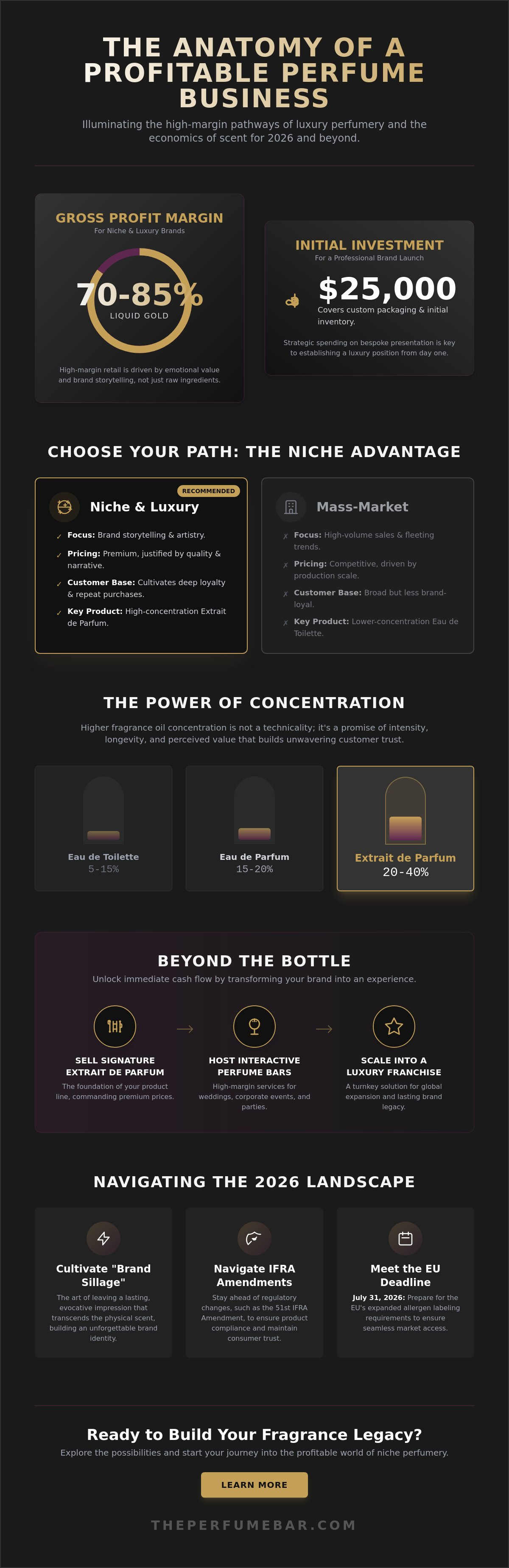
Even when global economies face turbulence, the desire for a signature scent remains steadfast. It's a small, daily luxury that individuals are rarely willing to sacrifice, treating it as a profound form of self-expression and a shield against the mundane. The psychological value of a fragrance is immense; it captures memories and defines presence in a way few other products can. In 2026, the typical gross profit margin for luxury and niche perfume brands remains remarkably high, consistently ranging between 70% and 85%.
Understanding the Margin Gap: Mass-Market vs. Niche
The divide between a mass-produced Eau de Toilette and a niche Extrait de Parfum isn't just a matter of price. It's a fundamental difference in philosophy. While mass-market brands rely on high-volume sales and fleeting trends, niche houses use evocative brand storytelling to create a world where a fragrance becomes an extension of the wearer's soul. This artistic narrative allows for significant markups that far exceed the cost of raw ingredients. Modern consumers are increasingly sophisticated, seeking out sillage and longevity. They desire a scent that lingers like a whispered secret long after they've left the room. This lasting impression justifies the luxury price points that drive profitability in the niche segment.
The Value of Concentration: Why Extrait de Parfum Wins
Throughout the history of the perfume industry, the classification of oil concentration has always been the hallmark of quality. An Extrait de Parfum typically boasts a concentration of 20% to 40% fragrance oil. This isn't a mere technicality; it's a promise of intoxicating intensity and endurance. While the initial investment in these precious, bespoke accords is higher, the perceived value to the customer is exponentially greater. Higher concentrations actually help stabilize the business by increasing repeat purchases. When a scent performs beautifully, it builds an ethereal bond of trust with the wearer. In a crowded market, focusing on the potency of an Extrait is a primary reason why is a perfume business profitable for those who prioritize quality over the clinical dryness of mass production.
Beyond the Bottle: Diversifying Revenue Through Events and Experiences
True luxury is never static; it lives in the moments we inhabit and the memories we curate. While a signature flacon on a vanity is a beautiful thing, the modern fragrance landscape demands more than a silent product on a shelf. By evolving into a service-based model, a brand transcends the traditional retail cycle. This shift into "Fragrance as an Experience" introduces a high-margin service layer that complements the sale of Extrait de Parfum. When entrepreneurs evaluate if is a perfume business profitable, they often overlook the immediate cash flow generated by sensory storytelling. It's a dance of the senses. A performance of alchemy.
The global perfume market size and growth projections for 2026 highlight a significant move toward experiential luxury. Consumers aren't just buying scents; they're investing in identity. Events allow a brand to capture this desire in real-time, turning a marketing effort into a direct revenue stream. This "marketing-as-revenue" approach builds brand equity while covering its own costs. You're not just selling a bottle. You're capturing a feeling.
The Interactive Perfume Bar Model
Imagine a wedding where guests don't just leave with a favor, but with a bespoke scent they helped compose. An interactive perfume bar invites guests to explore various accords, from ethereal florals to grounding woods, under the guidance of a specialist. This social scent-mixing creates a premium atmosphere that justifies significant service fees. Beyond the immediate payment for the event, every guest becomes a potential lifelong customer. The logistics are elegant and lean, requiring only a curated kit of base notes and the expertise of a curator. It's an intimate way to introduce your bespoke event services to a discerning audience.
Corporate Activations and Luxury Partnerships
B2B opportunities offer a stable and lucrative path for a fragrance house. Luxury hotels, high-end boutiques, and corporate entities frequently seek unique ways to engage their guests. A signature workshop or a brand activation provides an intoxicating layer of sophistication to their offerings. These partnerships often lead to recurring revenue through the creation of signature scents for specific locations or annual functions. Scaling this model is remarkably efficient. Unlike traditional retail, you don't need the overhead of a permanent storefront in every city. You simply need the passion of a trained specialist and a collection of exquisite scents. When asking if is a perfume business profitable, the answer becomes a resounding yes when you leverage these diverse, high-impact revenue streams.
Strategic Costs and the Reality of Startup Capital in 2026
The creation of a fragrance house is an exercise in disciplined elegance. It's a journey where the ledger must be as balanced as the accords in a base note. When discerning entrepreneurs ask, is a perfume business profitable, they're often surprised to find that the "liquid gold" itself is only one part of the financial symphony. In 2026, the path to a professional brand launch typically requires a capital investment between $10,000 and $25,000. This range allows for the custom packaging and professional inventory necessary to stand amongst the titans of niche perfumery. It's a shift from the inventory-heavy models of the past to a branding-centric approach that prioritizes the narrative over the volume.
There are shadows in the garden that every creator must navigate. Regulatory compliance is a significant, often hidden, cost that ensures your brand's longevity. For instance, the EU's expanded allergen labeling rules under Regulation EU 2023/1545 become mandatory for new products on July 31, 2026. Furthermore, existing formulations must align with the IFRA 51st Amendment standards by June 30, 2026. You should budget at least $3,000 for specialized compliance testing and ingredient analysis. These aren't mere hurdles; they're the benchmarks of a truly professional house. They protect both the wearer and the brand's intoxicating reputation.
Inventory vs. Branding: Where to Allocate Your Budget
The soul of your scent lives in the bottle, but its heart beats in the branding. High-end flacon design and bespoke packaging are non-negotiable for luxury profitability. In our digital age, the unboxing experience serves as the first physical embrace between the brand and the customer. According to fragrance market trends, the rise of online retail and experiential hybrids means your visual assets must be as evocative as the sillage you create. Invest in olfactory storytelling and professional visual assets that transport the customer before the first spritz ever touches their skin.
Operational Efficiency in a Premium Fragrance House
True efficiency is found in the deliberate and the rare. Managing a supply chain for precious accords like Oud or ethically sourced Mysore Sandalwood requires the eye of a knowledgeable curator. A "lean" luxury model focuses on the power of a signature scent rather than a sprawling catalog of mediocre options. By producing small batches of high-concentration Extrait de Parfum, you reduce waste and maintain an air of exclusivity. This steady, confident flow of production respects the craft. It ensures that every bottle is a masterpiece of self-expression rather than a product of frantic discount retail. This focus on quality over quantity is exactly how is a perfume business profitable in a market that craves authenticity.
Key Success Drivers: From Olfactory Artistry to Brand Sillage
The most common whisper of doubt for a new creator is simple. Why would someone choose your artisanal blend over a global designer icon? It's a valid question. To compete with the giants, you must offer what they cannot: a soul. While legacy houses often prioritize mass appeal, a niche brand thrives on specificity. This is why the question of is a perfume business profitable is fundamentally tied to your ability to offer an intimate, bespoke experience. This is where the concept of "Brand Sillage" takes root. Just as a fine fragrance leaves an intoxicating trail in a room, your business must leave a lasting impression in the mind of the consumer.
When evaluating is a perfume business profitable, one must look at the sillage of the brand itself. It's the emotional resonance that lingers long after the purchase. Successful founders don't just sell a product; they curate a lifestyle. They transform a simple glass bottle into a vessel for self-expression. This transition from commodity to identity is the ultimate driver of high-margin success in 2026. You aren't just selling a scent. You're selling a new way for your customer to be seen by the world.
Developing a Signature Olfactory Identity
Generic scents are the death of luxury. If your fragrance reminds a customer of a thousand other bottles, you're forced into a price war where nobody wins. Profitability requires a unique olfactory signature. This means working with a perfumer who understands the art of the bespoke accord. You aren't just mixing notes; you're capturing narratives. Perhaps it's a scent designed for the humid heat of a tropical evening or a crisp, metallic blend for a high-stakes boardroom. By targeting specific social settings and emotional states, you create a product that feels indispensable. It becomes a part of the wearer's personal history.
Marketing the Invisible: The Art of Scent Storytelling
How do you sell a smell through a screen? You sell the story. Evocative language is your primary tool. Instead of listing ingredients like a grocery list, describe the place the scent evokes. Talk about the ethereal light of a Parisian morning or the intoxicating depth of an ancient library. In 2026, building a community of "fragrance heads" is essential. These collectors don't just buy; they advocate. Engage with influencers who treat perfumery as an art form rather than a transaction. This organic growth builds a foundation of trust that mass-market advertising can never replicate. Ready to begin your journey? Explore our signature Extrait de Parfum collection to see how we define the art of the narrative.
Scaling Your Ambition: The Luxury Franchise Path to Profitability
The journey from a single, intimate boutique to a national presence is a delicate unfolding. It's much like the way an Extrait de Parfum reveals its heart notes over several hours. For many visionaries, the question is no longer just is a perfume business profitable at a local level, but how to replicate that sensory magic without losing the soul of the brand. Franchising offers a sophisticated answer. It provides a structured pathway to scale a proven luxury model while maintaining the artistic integrity of every scent and every interaction. It's a partnership of shared passion. A legacy in the making.
A luxury fragrance franchise isn't merely a retail expansion. It's the propagation of a specific sensory narrative. By joining an established house, entrepreneurs bypass the treacherous early stages of scent development and the heavy lifting of regulatory compliance. They step into a world where the "Brand Sillage" is already established. This turnkey approach allows for an immediate focus on the guest experience and the high-margin events that define a modern fragrance destination. Centralized supply chains protect franchisee margins by providing direct access to the rare accords and bespoke packaging that define the brand’s intoxicating reputation.
The Franchise Advantage: Brand Power and Support
Leveraging an established "olfactory library" is an immense strategic advantage. Instead of spending years perfecting a single signature scent, you inherit a curated collection of masterpieces that have already captured the hearts of a discerning audience. This foundation of trust is invaluable. Centralized marketing and events support ensure that your local destination thrives from day one. You're never alone in the garden. You have the guidance of specialists who understand the nuances of the market and the transformative power of smell. This low-risk entry point into the high-end fragrance market ensures that the answer to whether is a perfume business profitable is backed by a history of success and a future of shared growth.
Next Steps: Joining The Perfume Bar Legacy
The roadmap to ownership is clear and inviting. We've refined the balance between the artistic and the commercial, proving that an Extrait de Parfum and Events model is not just sustainable, but deeply rewarding. It's time to transform your passion for the olfactory arts into a thriving reality. We invite you to Discover how to own your own luxury fragrance destination with The Perfume Bar. Together, we can capture memories in bottles and create a sillage that spans the nation. Your signature story begins here.
Crafting Your Signature Legacy in Scent
The path to an enduring fragrance house is woven from more than just aromatic molecules. It requires a delicate balance of "liquid gold" economics and the art of the narrative. We've explored how the intoxicating potency of Extrait de Parfum creates high-margin loyalty and how interactive events turn a fleeting scent into a lasting memory. While the initial capital requirements for a bespoke brand are significant, the question of whether is a perfume business profitable is answered through strategic diversification and the cultivation of a unique brand sillage. It's a journey from the artistic to the commercial. A transformation of passion into a sustainable legacy.
Founded in 2014, The Perfume Bar has spent a decade mastering the nuances of the luxury market. As specialists in high-concentration compositions and high-end event activations, we've developed a proven model that resonates with the modern, discerning consumer. We invite you to step into our world and leverage our expertise to build your own sanctuary of scent. Explore Luxury Franchise Opportunities with The Perfume Bar and discover the power of a turnkey destination. Your future as a curator of ethereal experiences is waiting to be written. The air is ready for your story.
Frequently Asked Questions
Is a perfume business profitable for beginners in 2026?
Yes, beginners can find significant success by targeting niche audiences and prioritizing the olfactory narrative over mass-market volume. While the landscape is competitive, the question of whether is a perfume business profitable depends on your ability to offer a unique, bespoke experience that designer brands cannot replicate. By focusing on high-concentration Extrait de Parfum and experiential services, new founders can secure a place in the $64.3 billion to $88.7 billion global market.
How much investment is typically required to start a luxury fragrance brand?
A professional brand launch in 2026 typically requires an investment between $10,000 and $25,000. This capital covers the creation of bespoke packaging, custom flacons, and a professional starting inventory. While ultra-lean digital launches can begin for as little as $500, a luxury house requires higher upfront costs to establish the shelf-appeal and sophisticated branding necessary for premium positioning.
What is the average profit margin on a bottle of Extrait de Parfum?
Luxury and niche brands typically command gross profit margins between 70% and 85%. This high margin is driven by the use of precious accords and the intoxicating intensity of the Extrait concentration. Because these formulations last longer on the skin and offer a superior sillage, customers are often willing to pay a premium for the artistic value and performance of the scent.
Can I start a perfume business from home or do I need a retail shop?
You can certainly begin your journey from a home-based studio, especially if you focus on a direct-to-consumer digital model or event-based services. In the early stages, a permanent retail shop is often unnecessary overhead. Many successful curators use their home as a laboratory for scent-mixing and storytelling, later expanding into a luxury franchise or boutique once their signature accords have gained a dedicated following.
How do perfume event services compare to retail in terms of profitability?
Event services often provide more immediate cash flow and higher service-based margins than traditional retail. While a retail sale relies on a single purchase, an interactive perfume bar or corporate workshop generates revenue through both service fees and product sales. This experiential retail model reduces the reliance on inventory turnover and builds an intimate, emotional connection with a captive audience.
What are the biggest risks when starting a fragrance business?
The primary risks involve navigating complex regulatory deadlines and the high cost of ingredient compliance. For instance, new products must meet expanded EU allergen labeling rules by July 31, 2026. Failing to stay ahead of IFRA amendments can result in costly reformulations. Additionally, the market saturation of mass-market "dupes" makes it essential to maintain a truly bespoke and high-end brand identity.
Is it better to create my own scents or buy a franchise?
Creating your own scents offers pure artistic freedom but requires a long development period of 18 months or more. Conversely, a franchise provides a turnkey solution with an established olfactory library and proven marketing strategies. For entrepreneurs asking is a perfume business profitable, a franchise often offers a faster path to ROI by leveraging a decade of luxury market expertise and a recognized brand name.
How long does it take for a new perfume brand to become profitable?
The timeline varies based on your chosen business model. A private label approach can get you to market in 8 to 12 weeks, leading to faster initial returns. However, developing a completely custom fragrance house usually takes 18 to 24 months to reach profitability. Success depends on how quickly you can build a community of collectors who advocate for your signature sillage.