

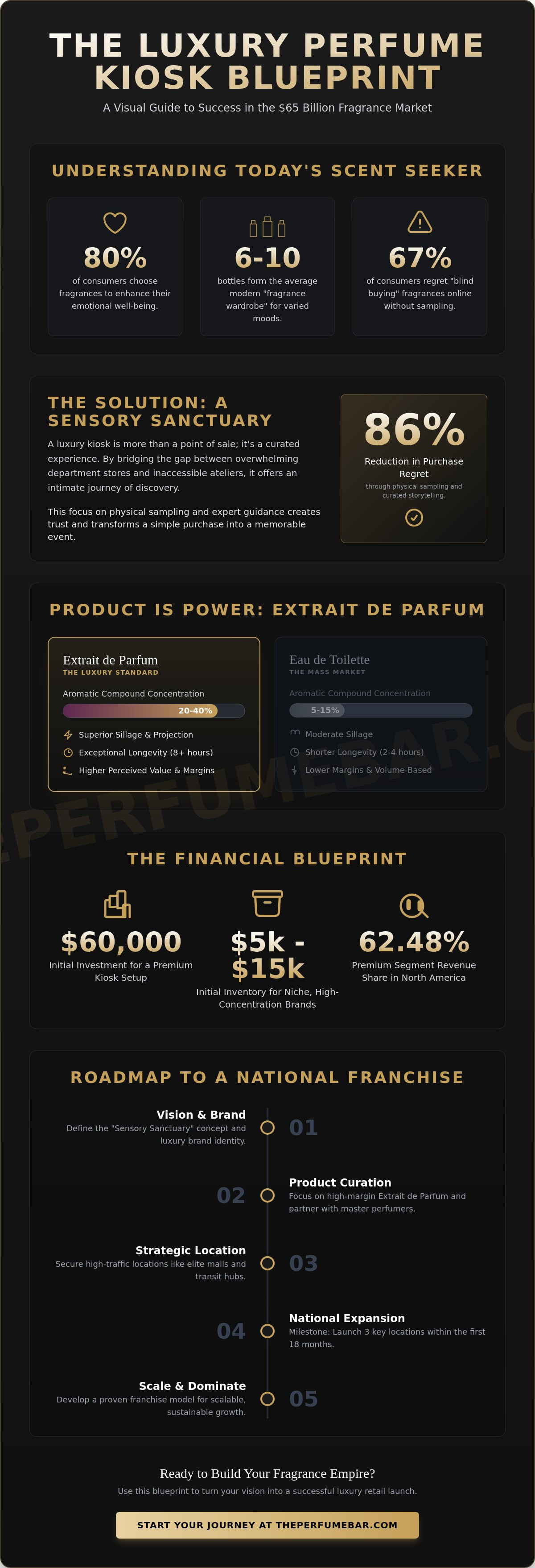
The $65 billion global fragrance market is no longer driven by the casual spritz; it's dominated by the 80% of consumers who now seek scents to transform their emotional well-being. While many entrepreneurs see a mall stall as a mere point of sale, the most successful ventures recognize that a high-end perfume kiosk business plan must revolve around creating a sensory sanctuary. You aren't just selling a bottle. You're offering an intimate experience that reduces purchase regret by 86% through physical sampling and curated storytelling.
You likely feel the weight of distinguishing your brand in a crowded market, especially when facing the nuances of UAE national licensing or the $60,000 initial investment required for a premium setup. It's a delicate balance between art and commerce. This guide promises to transform that uncertainty into a professional roadmap for your luxury retail launch. We'll explore the ROI of boutique models, the rising demand for Arabic Extrait de Parfum, and the proven strategies for scaling your fragrance franchise in 2026.
Key Takeaways
- Discover why the intense sillage of Extrait de Parfum offers a more compelling value proposition and higher margins than traditional mass-market formulations.
- Develop a comprehensive perfume kiosk business plan that treats every customer interaction as a bespoke sensory journey rather than a mere retail exchange.
- Identify the most lucrative national locations for a luxury launch, from elite malls to transit hubs, while mastering the art of scent-focused kiosk design.
- Understand the specific financial architecture required for 2026, including the ROI of high-concentration scents and the costs of custom boutique construction.
- Learn how to scale your vision through a proven franchise model that provides access to exclusive fragrance events and a curated portfolio of intoxicating accords.
The Visionary Foundation: Defining Your Perfume Kiosk Market Opportunity
By May 2026, the global fragrance market is projected to reach a staggering revenue of nearly $65 billion. This growth isn't coming from the generic, mass-produced scents of the past decade. Instead, it's fueled by a sophisticated shift toward niche, high-concentration liquids that linger on the skin and in the memory. A successful perfume kiosk business plan must recognize that the modern consumer no longer seeks a single signature scent. They're building "fragrance wardrobes" of 6 to 10 bottles to suit shifting moods and occasions. This evolution creates a unique opening for a retail model that prioritizes depth over volume.
Your primary competitive advantage lies in the distinction between standard retail and olfactory artistry. While most mall outlets focus on Eau de Toilette, your USP centers on Extrait de Parfum. With a concentration typically ranging from 20% to 40% aromatic compounds, these scents command higher margins because they offer superior sillage and longevity. This is the "Sensory Sanctuary" concept. It's an invitation to step away from the frantic pace of discount retail and into a curated space where fragrance is treated as a profound form of self-expression. You're not just operating a stall; you're hosting a destination for the 80% of consumers who now choose scents to enhance their emotional well-being.
Executive Summary: Capturing the Scent of Success
Your mission must transcend the transaction. It should emphasize the preservation of olfactory artistry and the creation of bespoke memories. Success in this sector is measured by more than daily sales; it's defined by the rhythmic quality of your brand's presence in high-traffic hubs. By setting clear milestones for national expansion, such as launching three key locations within the first 18 months, you establish a footprint that feels both intentional and prestigious. This is where the narrative begins, turning a simple purchase into a meaningful sensory experience.
Market Analysis and the Luxury Gap
The demand for high-sillage, long-lasting fragrances has never been more palpable. In North America alone, the premium segment accounted for 62.48% of total revenue in early 2026. Despite this, many high-end shoppers find department stores overwhelming and private ateliers too inaccessible. Understanding the history of perfume helps us see that luxury has always thrived on intimacy and expert guidance. The boutique kiosk serves as a vital bridge, connecting the accessibility of a high-traffic promenade with the intimate, whispered expertise of a private atelier. By identifying underserved national retail zones, particularly in growing luxury hubs, your business can capture the attention of the 65% of luxury buyers who are now willing to pay more for sustainable, high-quality options.
The Olfactory Architecture: Product Strategy and Brand Identity
A luxury kiosk is far more than a display of glass bottles. It's a curated gallery where liquid art meets human emotion. In your perfume kiosk business plan, the product strategy must prioritize the intoxicating power of Extrait de Parfum. Since 67% of consumers regret "blind buying" fragrances online, your physical presence becomes a crucial touchpoint for discovery. By focusing on sillage, the trail left by a scent, you use the product itself as your primary marketing tool. A single spritz of a high-concentration accord can linger for hours, drawing passersby into your olfactory world. It's an invitation to linger and explore.
Interactive elements turn a simple test into a social event. Encourage guests to explore the layers of a scent, from the fleeting top notes to the enduring base. This immersive approach justifies the $5,000 to $15,000 initial inventory investment typically required to stock premium, niche brands. Packaging also plays a silent but powerful role. Bespoke bottles and heavy, velvet-lined boxes aren't just containers. They're extensions of the fragrance's story, turning a purchase into a cherished memory.
Essential Components of a Luxury Fragrance Plan
Success requires partnering with master perfumers who specialize in high-concentration Extrait de Parfum. Your inventory management should reflect the high value and small footprint of these items, ensuring every square inch of your kiosk generates maximum ROI. While the U.S. Small Business Administration offers a template for a comprehensive business plan, your specific strategy must include limited edition "scent stories." These rare releases create urgency and encourage repeat visits from collectors. You might explore curated fragrance collections to see how narrative drives brand loyalty.
Brand Persona: The Knowledgeable Curator
Your brand voice should be an invitation to wonder. It's evocative and sophisticated, mirroring the fluidity of the scents you sell. Avoid the frantic energy of traditional retail. Instead, adopt a leisurely rhythm that respects the customer's journey. Staff shouldn't be sales associates; they're Scent Guides. They're trained to speak of accords and olfactory notes with the passion of an artist. This expertise transforms a transaction into a consultation. Your visual identity should reflect this refinement, using minimalist lines and rich textures to create a space that feels like a private atelier in the heart of a bustling city.
Operational Excellence: Strategic Location and the Franchise Model
Selecting the right stage for your olfactory performance is the most critical decision in your perfume kiosk business plan. While high-traffic national hubs like luxury malls or transit centers offer a steady stream of curious travelers, your physical design must account for the invisible. Managing airflow is essential to prevent olfactory fatigue, ensuring that the ethereal notes of one Extrait de Parfum don't clash with the intoxicating accords of another. In these bustling environments, where average monthly kiosk rent settles around $1,500, your space must act as a filtered oasis. Maintaining the integrity of delicate fragrance oils also requires climate-controlled storage to preserve the complex chemical structures that define a true luxury scent.
Comparing Business Paths: Franchise vs. Independent
Deciding between an independent boutique and a franchise model often dictates your speed to market. An independent path offers total creative freedom but requires building vendor relationships and trade licenses from the ground up. Conversely, a franchise provides the power of established brand recognition and immediate access to a luxury niche perfume market that is projected to dominate the industry throughout 2026. This path often includes comprehensive support systems, from ongoing training in fine perfumery to pre-negotiated supply chains for rare ingredients. It turns the daunting task of startup into a rhythmic, guided journey, allowing you to focus on the art of the sale rather than the friction of logistics.
Technical Setup and National Compliance
Navigating the administrative landscape is a necessary step in grounding your artistic vision. National trade license requirements for cosmetics and retail typically cost between $200 and $2,000, depending on your specific location and local government mandates. Beyond the paperwork, security protocols for high-value inventory are paramount. Given that an initial stock of premium fragrances can represent an investment of up to $15,000, your kiosk must blend aesthetic beauty with robust protection. Utilizing sophisticated point-of-sale data allows you to refine your scent curation in real-time, ensuring your inventory reflects the evolving preferences of your most loyal patrons. This data-driven approach ensures that every bottle on your shelf tells a story that your audience is eager to hear.
The Financial Blueprint: Projections and Luxury Marketing
Translating the ethereal beauty of a scent into a robust financial model is the cornerstone of a successful perfume kiosk business plan. While the total cost to launch a luxury setup typically ranges from $20,000 to $60,000, your profitability hinges on the sophisticated margins of Extrait de Parfum. Unlike mass-market retailers, you're investing in high-concentration liquids that allow for markups of 50% to 70% below retail prices when sourcing wholesale. These premium scents often yield profit margins exceeding 100%. A custom-designed kiosk, which requires an investment between $10,000 and $30,000, isn't just an expense; it's a stage that justifies luxury pricing through a bespoke, intoxicating atmosphere.
Marketing a luxury scent requires moving beyond the transactional to embrace the narrative. By integrating your physical presence with private and corporate event services, you transform a retail location into a brand headquarters. Offering bespoke scent bars for high-end weddings or corporate gatherings creates a secondary revenue stream that reinforces your status as a knowledgeable curator. It's about building a community of enthusiasts who don't just buy a product. They invest in a memory. Your startup budget should allocate for a national marketing launch that blends digital storytelling with physical discovery to drive consistent foot traffic.
Revenue Streams Beyond the Counter
The counter is only the beginning of the journey. Upselling to bespoke event bars for elite gatherings allows you to showcase the transformative power of smell in an intimate social setting. Subscription models for "scent of the month" clubs ensure a steady rhythm of recurring revenue, while curated gift sets maximize national sales during peak festive seasons. These strategies turn a single purchase into a long-term relationship. Explore our luxury fragrance franchise opportunities to see how these diverse revenue streams integrate into a proven, high-margin model.
Digital Sillage: Online Integration
In 2026, the digital world serves as the preamble to the physical experience. Social media platforms are essential for capturing the "mood" of a scent before a guest ever reaches your kiosk. By 2026, it's projected that 773 million people worldwide will purchase fragrances online, making up 25% of total sales. Your kiosk serves as a vital "click and collect" hub, bridging the gap between digital discovery and physical validation. Influencer partnerships, particularly those focused on niche storytelling, can drive significant traffic by sharing the narrative of your most ethereal accords with a global audience.
Scaling the Sanctuary: The Path to a Perfume Bar Franchise
Transitioning from a conceptual perfume kiosk business plan to a vibrant, physical boutique is a journey of both logic and spirit. While the initial investment for a high-end setup ranges from $20,000 to $60,000, the true challenge lies in maintaining the aura of exclusivity as you scale. A proven franchise model mitigates the inherent risks of the luxury market by providing a rhythmic, tested blueprint for success. By 2026, premium fragrances account for 45% of global sales, and entering this space with a curated collection of Extrait de Parfum ensures you're meeting the highest standards of quality. You aren't just opening a retail stall. You're curating a sanctuary that invites the 80% of consumers who now seek scents to enhance their emotional well-being.
The Perfume Bar advantage lies in our deep-rooted expertise in olfactory storytelling. You gain access to exclusive, intoxicating accords and the technical knowledge required to host high-end fragrance events. These events are not merely side offerings. They are essential revenue drivers that transform your kiosk into a national destination for collectors and enthusiasts. Our support systems turn the daunting task of startup into a polished experience. You'll receive comprehensive training to become a master Scent Guide, learning to describe the sillage and complex notes of a bespoke fragrance with the passion of an artist. This expertise ensures that every interaction at your counter is as memorable as the scent itself.
Joining The Perfume Bar Family
For entrepreneurs with a passion for elegance, joining our family offers a streamlined path to market entry. You'll work with a curated, high-end product line that has already captured the hearts of the national market. We assist you in navigating the complexities of business licensing and permits, which typically cost between $200 and $2,000, ensuring your transition from business plan to grand opening is seamless. The journey is one of shared vision and sophisticated growth. It begins with a conversation and ends with the first spritz of an ethereal Extrait de Parfum in your very own luxury boutique.
The Future of Fragrance Retail
In an increasingly digital world, the enduring appeal of a physical, sensory experience remains unmatched. Physical sampling reduces purchase regret by 86%, making the boutique kiosk a vital hub for discovery and connection. The niche perfume sector in the UAE is projected to achieve a compound annual growth rate of 8.8% by 2026 as demand for traditional Arabic accords and personalized scents surges. This growth reflects a global hunger for authenticity and the transformative power of smell. Your boutique will stand as a testament to quality over quantity, offering a slow and deliberate journey for the modern fragrance seeker.
Discover the Art of the Fragrance Franchise with The Perfume Bar
Crafting Your Olfactory Legacy in the 2026 Landscape
The journey from a conceptual dream to a thriving boutique is paved with deliberate, artistic choices. You've explored the importance of high-concentration Extrait de Parfum and the strategic necessity of creating a sensory sanctuary in high-traffic hubs. Your perfume kiosk business plan serves as the blueprint for an experience that transcends simple retail. By focusing on the narrative of each scent and the science of sillage, you position your brand within the $65 billion global market as a beacon of sophistication. It's about turning a brief moment at a counter into a lifelong memory for your guests.
Since our founding in 2014, The Perfume Bar has remained deeply rooted in the rich olfactory traditions of the UAE. We are specialists in high-concentration Extrait de Parfum and provide a proven model for both luxury events and premium retail. This expertise allows you to bypass the uncertainty of a solo launch and step directly into a world of curated elegance. Begin Your Journey into Luxury Fragrance Franchising and transform your passion for fine scents into a lasting legacy. The world is waiting to discover the story only your boutique can tell.
Frequently Asked Questions
Is a perfume kiosk a profitable business in the UAE?
High profitability in the UAE is driven by a deep cultural appreciation for fragrance and a projected 8.8% annual growth rate in the niche sector by 2026. Consumers in this region prioritize high-concentration oils and long-lasting sillage, which allows for healthy margins on premium products. A strategic location in a premier mall ensures consistent foot traffic from both residents and the millions of tourists who visit annually.
What is the difference between a standard perfume stall and a luxury kiosk?
A luxury kiosk distinguishes itself through the "Sensory Sanctuary" concept and the exclusivity of its offerings. While standard stalls often focus on mass-market Eau de Toilette, a luxury boutique prioritizes Extrait de Parfum with concentrations reaching up to 40%. The design also differs significantly; custom builds costing between $10,000 and $30,000 create an intimate, high-end atmosphere that justifies premium pricing and attracts a more discerning demographic.
Do I need a specific license to sell Extrait de Parfum?
You require a standard national trade license and specific permits for the retail of cosmetic products. These licenses typically cost between $200 and $2,000 depending on your specific municipality and local government requirements. Ensuring compliance with health and safety standards is essential for maintaining the integrity of your brand. Your perfume kiosk business plan should account for these administrative steps to ensure a seamless launch without legal delays.
How much space is typically required for a high-end perfume kiosk?
A high-end perfume kiosk typically requires between 100 and 200 square feet of space. This compact footprint is designed for maximum efficiency, allowing you to showcase a curated collection without overwhelming the guest. The layout must prioritize "scent zones" to manage airflow and prevent olfactory fatigue. Even within this limited area, the focus remains on creating a leisurely, immersive environment that encourages discovery and personal expression.
What are the benefits of choosing a franchise over starting an independent perfume brand?
Choosing a franchise provides immediate access to a proven model and an established portfolio of exclusive Extrait de Parfum. This path reduces the risk associated with the luxury market by leveraging existing vendor relationships and national brand recognition. Franchisees benefit from specialized training in olfactory storytelling and event management. It turns a complex startup process into a guided journey, allowing you to focus on the artistry of the customer experience from day one.
How do I source high-quality fragrance oils and Extrait de Parfum for my kiosk?
High-quality sourcing involves partnering with master perfumers who specialize in high-concentration aromatic compounds. A robust perfume kiosk business plan identifies suppliers who provide ingredient transparency and sustainable options, as 65% of luxury buyers now prioritize eco-friendly products. Many entrepreneurs find that joining a franchise is the most reliable way to secure exclusive access to intoxicating, bespoke accords that aren't available to the general wholesale market.
Can a perfume kiosk business also offer event services?
Integrating event services like bespoke scent bars for weddings or corporate gatherings is a highly effective way to diversify your revenue. These mobile setups allow you to bring the "Sensory Sanctuary" experience directly to an intimate audience. It transforms your kiosk from a static retail point into a dynamic brand headquarters. Offering these services reinforces your position as a knowledgeable curator and creates memorable touchpoints that drive future retail sales.
What are the most important marketing strategies for a new fragrance boutique?
The most effective strategies combine digital storytelling with physical discovery. Use social media to capture the "mood" of a scent, reaching the 773 million people projected to engage with fragrance online by 2026. In-person, focus on physical sampling, which has been shown to reduce purchase regret by 86%. Influencer partnerships and "scent of the month" clubs also play vital roles in building a loyal community of fragrance enthusiasts who value quality over quantity.